

Ansi B16.5 Blind Flanges
Your Professional Ansi B16.5 Blind Flanges Supplier
Shanxi Hongkai Forging Co., Ltd. is located in China Energy Heavy Chemical Industry Base. Dingxiang County, the hometown of forging in Shanxi Province. Mainly produce flanges and forgings of various specifications. Application in piping installation, pressure vessel, equipment accessories.


Why Choose Us
Our Service
With strong technical force, advanced production technology, perfect quality inspection, and reliable after-sales service, it provides a basis for supervision and cooperation for many customers at home and abroad.
Our Certificate
The company Excellent Supplier of 2019 Safety production standardization certificate Quality management system certification.
Production Market
The products are mainly exported. It is exported to Europe, America and other countries and regions. The product quality is good, and the service is attentive. It is deeply appreciated and trusted by customers and users at home and abroad, and has won a high reputation. They have become one of the largest flange and forging suppliers in China.
Our Factory
Shanxi Hongkai Forging Co., Ltd. is located in China Energy Heavy Chemical Industry Base. Dingxiang County, the hometown of forging in Shanxi Province. Convenient transportation, abundant coal and power resources, fast communication and superior environment.
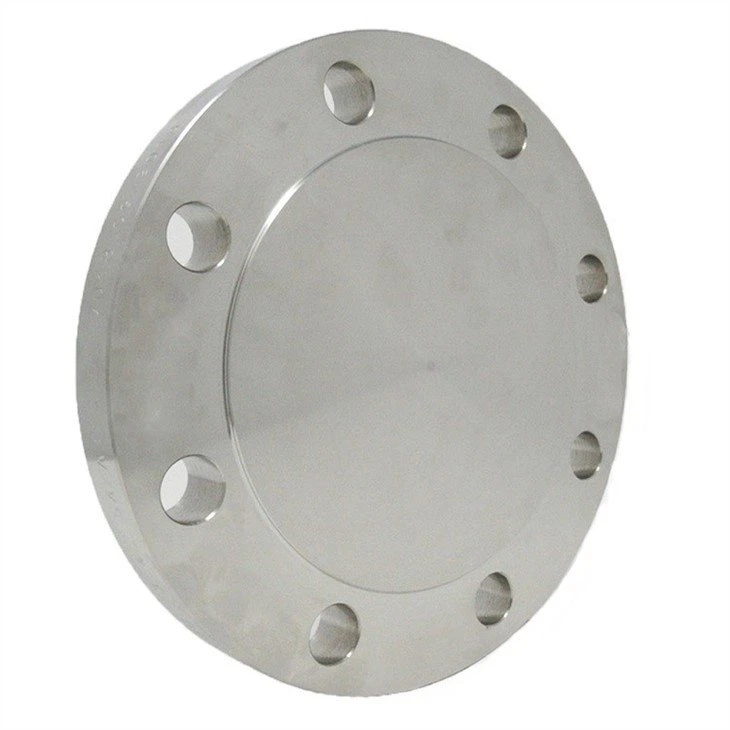
Features of Ansi B16.5 Blind Flanges
Leak-proof Design:
A solid disc with bolt holes and a sealing face ensures zero fluid escape.
Versatility:
Available in various sizes, pressure classes, and materials.
Standards Compliance:
Manufactured to ANSI / ASME B16.5 specifications for dimensional accuracy and pressure integrity.
Material Types of Ansi B16.5 Blind Flanges
Carbon Steel: Widely used for general industrial applications due to its excellent strength and cost-effectiveness. Common grades include ASTM A105 for forged flanges and ASTM A516 Grade 70 for plate flanges.
Stainless Steel: Offers superior corrosion resistance, making it ideal for chemical processing, food and beverage, and pharmaceutical industries. Grades like ASTM A182 F304/304L and F316/316L are popular choices, providing enhanced durability in aggressive media.
Alloy Steel: Designed for high-temperature and high-pressure services, as well as specific corrosive conditions. Examples include ASTM A182 F5, F9, F11, F22, and F91, which are crucial in power generation, oil and gas, and petrochemical sectors.
Duplex/Super Duplex Stainless Steel: Combines the benefits of austenitic and ferritic stainless steels, offering exceptional strength and corrosion resistance, particularly in chloride-rich environments.
Specification
|
Parameter |
Description / Values |
|
Standard |
ASME B16.5, API 6A, EN 1092-1, DIN |
|
Nominal Pipe Size (NPS) |
1/2" to 24" (ASME B16.5), 26" to 60" (ASME B16.47) |
|
Pressure Class (ASME) |
Class 150, 300, 600, 900, 1500, 2500 |
|
Pressure Nominal (PN, EN) |
PN6, PN10, PN16, PN25, PN40, PN63, PN100, PN160 |
|
Material |
Carbon Steel (A105, A350 LF2), Stainless Steel (A182 F304/304L, F316/316L), Alloy Steel (A182 F11, F22) |
|
Facing Type |
Raised Face (RF), Flat Face (FF), Ring Type Joint (RTJ) |
|
Manufacturing Process |
Forged, Plate Cut |
|
Gasket Type Compatibility |
Non-metallic flat, spiral wound, RTJ metal ring |
|
Surface Finish (RF) |
Typically 125-250 micro-inches Ra (3.2-6.3 µm) serrated finish |

1. Size and Dimensions ANSI standards specify various nominal pipe sizes for blind flanges, typically ranging from 1/2 inch to 72 inches in diameter. The dimensions adhere to the ANSI/ASME B16.5 standard for flanges, detailing the outer diameter, bolt circle diameter, and bolt hole diameter. This uniformity is crucial to ensure that blind flanges fit correctly onto the pipes they are designed to seal.
2.Pressure Ratings Blind flanges come with different pressure ratings, classified as Class 150, Class 300, Class 600, and so forth. These classifications indicate the flange's capability to withstand certain pressure levels, which is vital for applications involving high-pressure systems. The ANSI/ASME B16.5 standard provides comprehensive tables detailing the pressure-temperature ratings for different materials, enabling engineers to select the appropriate blind flange for their specific application.
3. Material Specifications ANSI standards also dictate the material compositions for blind flanges, ensuring that they are constructed from adequate materials that can withstand operational conditions. Typical materials include carbon steel, stainless steel, and alloys, each selected based on factors such as temperature, pressure, and the chemical nature of the fluids that will be contained in the pipes.
4. Surface Finish and Bolt Holes The surface finish of blind flanges is another critical aspect covered by ANSI standards. A smooth surface aids in creating a tighter seal, preventing leaks. The standards also specify the arrangement and number of bolt holes, which are essential for proper fastening and security. Generally, the number of bolt holes is proportional to the size of the flange and the pressure rating.
Industries Served of Ansi B16.5 Blind Flanges
Oil & Gas:
Used to isolate sections during repair or prevent leakage.
Chemical:
Ensure safe shutdown for inspection and system integrity.
Water Treatment:
Used during pump or valve maintenance to ensure clean, efficient flow.
FAQ
We're well-known as one of the leading ansi b16.5 blind flanges manufacturers and suppliers in China. If you're going to wholesale high quality ansi b16.5 blind flanges with competitive price, welcome to get more information from our factory. Also, customized service is available.
Ansi B16 5 Class600 Blind Flanges, 6 blank flange, blind flange 3 inch